Zeno Electric
Belgian Grid Dynamics & Modern Industrial Infrastructure
Belgium is currently undergoing a pivotal structural transformation in its domestic energy landscape. Driven by the federal government's nuclear phase-out policies and aggressive decarbonization objectives, the country relies increasingly on high-penetration renewable sources. Large-scale North Sea offshore wind assets and distributed photovoltaic arrays across Flanders and Wallonia represent cleaner but highly volatile generation profiles. For Belgian commercial and industrial (C&I) sectors, this volatility translates directly into grid frequency deviations, voltage instability, and escalating capacity tariffs.
Under the operational surveillance of Elia (the Belgian national transmission grid operator), commercial and industrial facilities must strictly manage peak demand. High peak tariffs, driven by Belgium's capacity remuneration mechanism (CRM), place a heavy financial burden on energy-intensive operations such as chemical plants in the Port of Antwerp-Bruges, heavy manufacturing hubs in Ghent, and cold storage logistics centers in Liège. To mitigate these dynamic grid charges, modern industries are deploying localized Commercial & Industrial Energy Storage Cabinets (BESS) coupled with robust High-Voltage Circuit Breakers (HVCBs) to safely decouple load profiles and feed stabilized power back to the grid when required.
Information Gain: The Strategic Value of Peak Shaving in Belgium
Belgian network distribution operators (DNOs) like Fluvius, ORES, and Resa levy network costs based on the highest 15-minute average power demand (peak load) recorded each month. By integrating localized battery energy storage systems, an enterprise can programmatically charge lithium iron phosphate (LFP) cells during off-peak windows (or via onsite solar output) and discharge them during peak billing intervals. This process, known as peak shaving, not only slashes network utilization expenses but also stabilizes domestic switchgears against voltage sags and swell events.
High-Voltage Switchgear & Circuit Breakers: Technical Analysis for Belgium
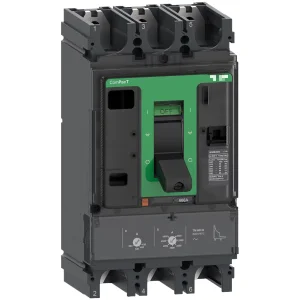
A BESS installation is only as resilient as its protection system. When integrating megawatt-class energy storage units with Belgium's 11kV, 15kV, 26kV, or 36kV regional distribution grids, fault protection becomes the paramount engineering priority. High-Voltage Circuit Breakers (HVCBs) are the primary guardians against downstream short-circuits, transformer overcurrents, and arc-flash hazards.
SF6 (Sulfur Hexafluoride) vs. Vacuum Interruption Technologies
Within medium and high-voltage grid topologies, the selection between Vacuum Circuit Breakers (VCBs) and SF6 Circuit Breakers depends on voltage levels, switching frequency, and environmental targets:
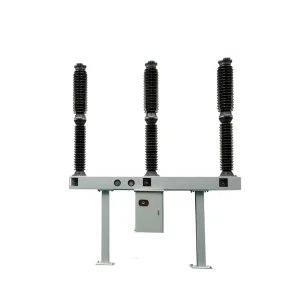
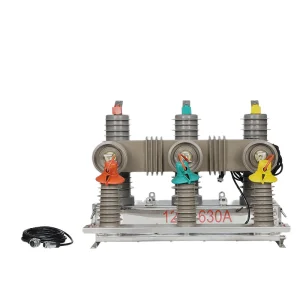
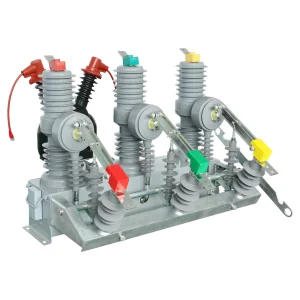
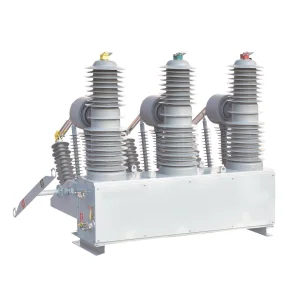
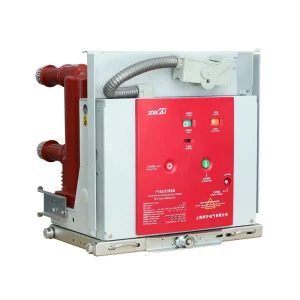
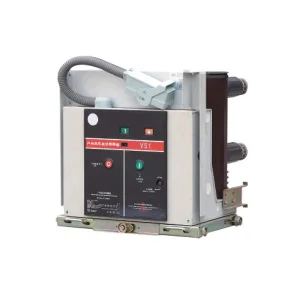
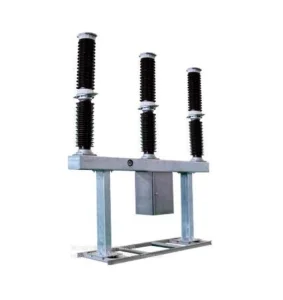
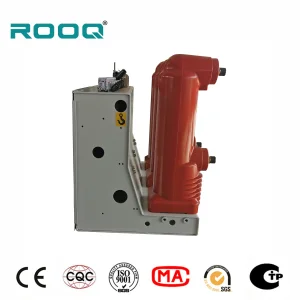
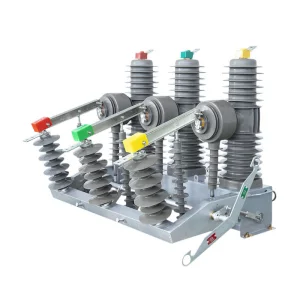
- Vacuum Circuit Breakers (VCBs): Exceptionally reliable for medium-voltage industrial distribution (typically 12kV up to 24kV/36kV). VCBs, such as the ZW32 and VS1-12 series, utilize high vacuum chambers to extinguish the electrical arc. They exhibit minimal mechanical wear, boast a high electrical endurance rating, require zero environmental gas monitoring, and are highly suited for frequent switching profiles typical of dynamic battery storage systems.
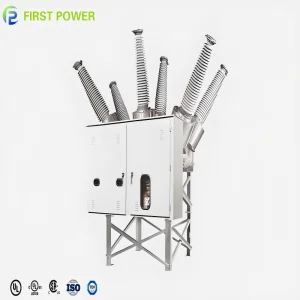
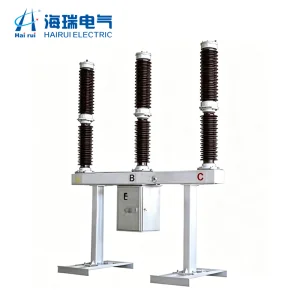
- SF6 (Sulfur Hexafluoride) Circuit Breakers: Preferred at higher voltage ratings (such as 72.5kV, 110kV, to 145kV applications) due to the outstanding dielectric strength and arc-quenching capabilities of SF6 gas. Devices like the LW30 dead tank breaker provide excellent protection for large-scale solar-plus-storage substations feeding directly into Elia’s sub-transmission lines. However, to align with EU fluorinated greenhouse gas (F-gas) regulations, these systems must incorporate leak detection sensors and gas density monitoring devices.
Belgian Compliance, Synergrid C10/11 & Grid Interconnection Codes
Deploying grid-scale energy storage or medium/high-voltage switchgear in Belgium demands strict compliance with regional safety frameworks. All generating, storage, and protective devices connecting to the low or medium-voltage grid must be homologated and certified according to Synergrid (the federation of Belgian electricity and gas grid operators) specifications.
The primary regulations governing these connections include:
- C10/11 Regulation: Defines the technical requirements for production units (including battery energy storage systems) operating in parallel with the distribution network. This standard outlines mandatory grid decoupling protections, over/under-voltage tripping limits, over/under-frequency protection thresholds, and active/reactive power control mechanisms.
- IEC/EN 62271 Series: Specifies design, testing, and safety parameters for high-voltage switchgear and controlgear assemblies. Every breaker deployed must bear verified type-test certificates from independent laboratories, demonstrating rated short-circuit making/breaking capacity, lightning impulse withstand voltage, and mechanical reliability.
- IEC 62933 (BESS Standards): Establishes comprehensive safety guidelines and testing procedures for electrical energy storage systems, focusing on thermal runaway prevention, electrochemical cell safety, and control system integrity.