How to Maintain Outdoor Energy Storage Systems in Winter?

Time:2026-10-25 Author:Aria
0%

Winter can quietly reduce the performance and safety margin of outdoor battery systems. Cold temperatures increase electrolyte resistance, slow chemical reactions, and limit charging power. The International Energy Agency reported that global battery storage additions reached about 42 GW in 2023, more than twice the previous year. This rapid expansion makes seasonal maintenance increasingly important.

This guide explains how to maintain outdoor energy storage systems in winter through practical inspections and documented procedures. The National Renewable Energy Laboratory has highlighted temperature, operating voltage, and cycling behavior as important factors in battery degradation. Therefore, technicians should check cell temperatures, state of charge, heating functions, ventilation, and enclosure seals before severe weather arrives.

Small details matter. Ice around a cabinet door can damage the gasket. Condensation beneath cable glands can trigger insulation faults. A blocked air filter may also reduce heating efficiency. Field service experience suggests that battery heating systems should be tested under realistic low-temperature conditions, not only during a brief indoor inspection.

EPRI guidance also emphasizes continuous monitoring, alarm review, and preventive maintenance for grid-connected storage assets. Operators should verify sensor calibration, firmware status, fire detection, and emergency shutdown functions. Local manufacturer instructions and applicable electrical standards must remain the primary authority.

The uncomfortable truth is that winter checklists are often too general. A lithium iron phosphate system and a high-nickel system may respond differently below freezing. Snow depth, wind exposure, humidity, and enclosure design also change the risk profile. This article offers a reliable starting point, but every site needs its own temperature limits, inspection records, and corrective actions.
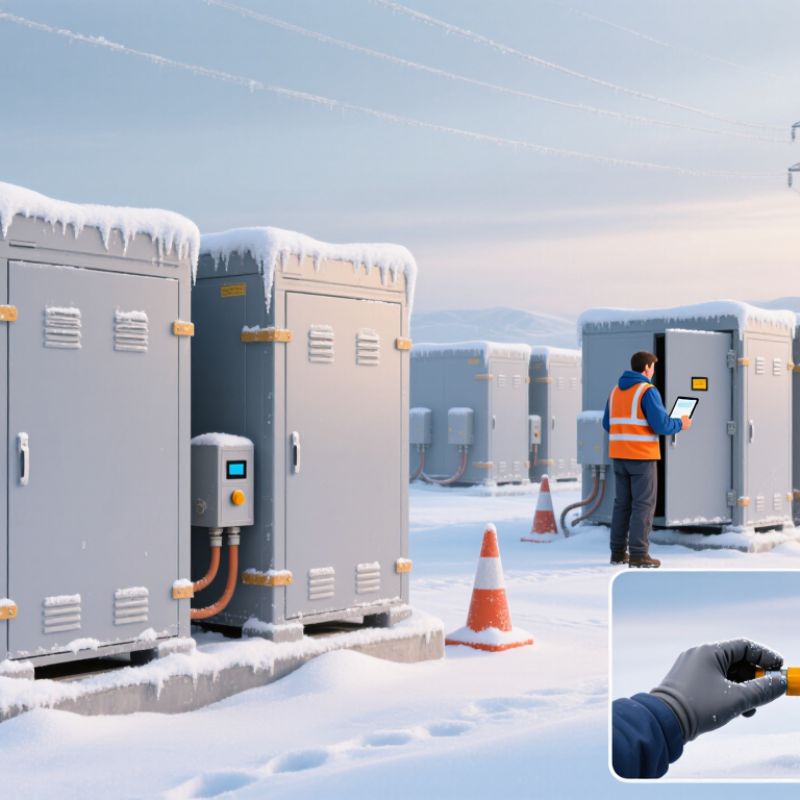
How to Maintain Outdoor Energy Storage Systems in Winter?

Understand Winter Risks for Outdoor Energy Storage Systems

Winter turns an outdoor energy storage system into a thermal management challenge. Low temperatures slow lithium-ion reactions and reduce available capacity. The U.S. Department of Energy’s Energy Storage Handbook warns that charging below 0°C can cause lithium plating and permanent damage. At approximately -20°C, many lithium-ion cells may lose 30% to 50% of their usable capacity, according to cold-weather battery data reviewed by Sandia National Laboratories.

The enclosure needs more than insulation. Check heaters, thermostats, ventilation paths, door seals, and condensation drains before freezing weather arrives. A blocked drain can leave meltwater around cable glands. That small detail matters. Moisture may increase corrosion and insulation failures. The National Renewable Energy Laboratory identifies temperature control, humidity, and enclosure design as important factors in battery lifetime and safety.

Operating software also needs review. Low-temperature charging limits should be enabled, while sudden high-power commands require caution. Measure cell temperature, not only outdoor air temperature. A sunny cabinet may read 5°C outside but remain below freezing inside. Battery management systems can misread conditions when sensors loosen or fail. This is an uncomfortable maintenance gap. Operators sometimes trust alarms too quickly. Record morning temperatures, charge limits, voltage differences, and heater operation during inspections. Compare those records with the manufacturer’s approved operating range and local electrical safety requirements.

Inspect and Prepare the System Before Cold Weather Arrives

Before cold weather arrives, inspect the system in daylight, not during an alarm. Check enclosure panels, door seals, cable glands, grounding points, and signs of condensation. Look for cracked insulation, loose terminals, corrosion, or water marks beneath the battery racks. Cold changes everything.

Review the operating manual and confirm the permitted charging temperature.

Many lithium-ion systems should not charge below freezing unless approved heating controls are active. The U.S. Department of Energy’s Energy Storage Grand Challenge Roadmap identifies thermal management and monitoring as essential reliability measures. NERC’s 2024–2025 Winter Reliability Assessment also highlights extreme cold as a risk to battery availability when charging limits tighten.

Record cell temperatures, state of charge, alarms, and heater operation before the first freeze.

Document every reading.

Remove leaves and snow from vents, but never block airflow around cooling equipment. Test backup power for controls and communications. Inspect the drainage path, because melting snow can enter low cable openings.

I have learned that a clean cabinet can still hide moisture underneath its floor plate. That detail is easy to miss. It is worth checking twice.

Avoid topping up a cold battery immediately after a shutdown. Allow the system to reach its approved temperature range, then follow the documented charging procedure. Review remote alerts daily during severe weather.

If readings conflict with the manual, stop and ask a qualified technician. Guesswork is not maintenance.

Protect Batteries from Low Temperatures and Moisture

How to Maintain Outdoor Energy Storage Systems in Winter?

Cold weather affects both battery output and charging safety. According to the U.S. Department of Energy, lithium-ion batteries may suffer lithium plating when charged below 0°C. Battery capacity also commonly falls by 10% to 20% around freezing temperatures, depending on chemistry and design. The effect becomes more severe near -20°C.

Moisture creates a quieter problem. Condensation can form inside cabinets when cold equipment meets warmer air. Sandia National Laboratories’ energy storage safety guidance emphasizes thermal monitoring, enclosure protection, and regular inspection. Check door seals, cable glands, drainage paths, and corrosion marks after snow or rain. Keep vents clear, but avoid sealing cabinets with improvised materials. That can trap humidity. A perfect maintenance schedule is unrealistic. Weather changes quickly.

Tips: Confirm the battery heater works before freezing conditions arrive. Do not charge a frozen battery. Let its internal temperature rise within the approved operating range. Use temperature sensors near battery modules, not only inside the cabinet. Record unusual voltage differences and sudden capacity loss. An IP rating helps, but it does not replace inspection. Clean moisture carefully, and isolate damaged equipment for qualified evaluation. The International Energy Agency’s 2024 battery report highlights the growing importance of reliable storage as deployment expands. Reliability begins with small checks, even when they feel repetitive.

Manage Charging, Discharging, and Power Loads in Winter

How to Maintain Outdoor Energy Storage Systems in Winter?

Cold weather changes how an outdoor energy storage system accepts, stores, and delivers power. Before charging, check the battery temperature, cable insulation, connectors, and ventilation openings. Moisture can freeze around terminals overnight. Never force charging when the battery is below its permitted temperature range. Use the system’s heating function only when specified by its manual. A covered, dry enclosure helps, but it must not block airflow.

Manage charging around the weather forecast. Charge during the warmest part of the day when possible. Keep the battery at a moderate level instead of leaving it completely full or empty for weeks. A practical reserve can support essential loads during a sudden cold snap. Heating, pumps, refrigerators, and communication equipment may demand more energy than expected. Measure their combined load rather than guessing.

Discharge carefully. Start with critical equipment, then add nonessential devices as capacity allows. Reduce high-power loads during battery recovery periods. I once underestimated a small heater’s overnight consumption; the reserve fell much faster than the display suggested. That mistake showed me why real measurements matter. Check voltage, temperature, and error alerts each day. Do not rely on one reading. Winter conditions can change quickly, and a clean-looking cable may still contain hidden damage. Record daily energy use for a week, then adjust charging times and load priorities based on actual performance.

Monitor System Performance and Perform Routine Winter Checks

Winter maintenance begins with accurate performance monitoring. Record battery temperature, state of charge, voltage, current, and alarm history each day. Compare these readings with normal operating ranges, not just yesterday’s values. A quiet system is not always healthy. Slow capacity loss may appear before an alarm.

Inspect the enclosure after snow, freezing rain, and strong winds. Clear blocked vents carefully, and check seals for cracks or water entry. Look for condensation, corrosion, loose cable glands, and damaged insulation. Confirm that heating and ventilation controls respond correctly. Never charge batteries below the manufacturer’s approved temperature range. If temperatures fall too low, use the specified warming procedure and let a qualified technician investigate unusual readings.

Keep a dated inspection log with photographs and corrective actions. This evidence supports reliable decisions and helps technicians identify repeated faults. Remote alerts are useful, but they should not replace physical checks. Technicians should test protective devices according to local electrical requirements and the system’s service instructions. No checklist catches everything. Dust, hidden ice, or a partially blocked drain can be missed during a rushed visit. Review the checklist after every inspection and adjust it when weather, site conditions, or operating loads change. My practical concern is simple: maintenance plans often look complete until one small assumption fails.

How to Maintain Outdoor Energy Storage Systems in Winter? - Monitor System Performance and Perform Routine Winter Checks

Maintenance Area Data Dimension Typical Winter Reference Routine Check Recommended Action Suggested Frequency
Battery Performance Battery temperature Keep within the operating range specified by the battery manufacturer; avoid charging lithium-ion batteries below 0°C unless an approved low-temperature heating or charging system is active. Review battery temperature sensors and check for abnormal temperature differences between modules. Pause charging when the battery is below its permitted charging temperature. Restore charging only after the system confirms a safe temperature. Daily through remote monitoring; on-site monthly
State of charge (SOC) Follow the battery supplier’s limits. For planned winter standby, a moderate SOC such as 40–60% is commonly used when permitted by the system design. Compare actual SOC with the configured upper and lower operating limits. Avoid prolonged storage at 0% SOC or at maximum SOC unless required by the operating strategy. Investigate rapid SOC decline. Daily by remote monitoring; before and after severe weather
Charge and discharge power Power may be automatically limited in low temperatures. Use the battery management system limits rather than applying a fixed universal value. Check whether charge or discharge power is being derated and compare it with historical winter performance. Reduce operating power if alarms, excessive temperature spread, or repeated protection events occur. Weekly trend review; immediately after an alarm
System Monitoring Alarm and fault status No active critical alarms; warning history should be reviewed for repeated events. Check the battery management system, power conversion system, fire detection, communication, and auxiliary-power alarms. Record the alarm code, time, temperature, SOC, and operating condition before resetting or servicing the equipment. Daily remotely; weekly review of alarm history
Energy efficiency and availability Compare round-trip efficiency and availability with the system’s normal baseline; winter heating loads may increase auxiliary consumption. Track energy charged, energy discharged, auxiliary consumption, and hours unavailable. Investigate sudden efficiency loss, unexplained standby consumption, or repeated communication outages. Weekly performance review
Enclosure and Weather Protection Snow and ice accumulation Air inlets, outlets, doors, drainage paths, and emergency access must remain clear. Inspect the enclosure roof, ventilation openings, cable entries, and access routes for snow, ice, or blocked drainage. Remove snow with non-damaging tools. Do not obstruct ventilation or use open flames to melt ice. After snowfall, freezing rain, or strong wind
Moisture and condensation No standing water, active leaks, visible condensation, or corrosion inside the enclosure. Inspect door seals, cable glands, drain paths, floors, and internal surfaces for water ingress. Isolate affected equipment according to the safety procedure and arrange qualified service if moisture reaches electrical components. Monthly and after heavy precipitation
Ventilation and heating Fans, heaters, thermostats, and filters should operate within their configured control limits. Check fan operation, heater status, filter cleanliness, and unusual noise or vibration. Clean or replace filters according to the maintenance plan. Escalate failed heaters or fans promptly. Monthly; before the coldest period
Electrical and Safety Checks Cables, terminals, and grounding No loose connections, damaged insulation, exposed conductors, overheating marks, or abnormal corrosion. Perform a visual inspection without opening energized equipment or removing protective covers. Keep the system energized only when safe. Qualified personnel should perform torque, insulation, and grounding tests. Monthly visual check; qualified annual service
Fire and emergency equipment Detection, suppression, emergency stop, signage, and access should be operational and unobstructed. Check inspection dates, pressure indicators where applicable, emergency-stop accessibility, and clear escape routes. Do not bypass safety systems. Follow local regulations and the site emergency response plan. Monthly and after any emergency event
Documentation Winter inspection record Record date, weather, temperature, SOC, alarms, energy data, inspection findings, and corrective actions. Compare current readings with previous weeks and the approved operating limits. Escalate recurring faults or abnormal trends to qualified service personnel instead of repeatedly resetting the system. Update after every inspection or corrective action

Note: Operating and charging limits vary by battery chemistry, enclosure design, and system configuration. Always prioritize the approved manufacturer specifications, site procedures, and applicable electrical and fire-safety regulations.

FAQS

Why does winter reduce outdoor energy storage performance?

Low temperatures slow lithium-ion reactions and reduce usable capacity. At around -20°C, capacity may fall by 30% to 50%. Cold changes everything.

Can the system charge below freezing?

Charging below 0°C may cause lithium plating and permanent cell damage. Use low-temperature charging limits and approved heating controls. Never guess.

What should operators measure during cold weather?

Measure cell temperature, outdoor temperature, state of charge, alarms, and voltage differences. A sunny enclosure may feel warm outside but remain below freezing inside. Record morning readings.

Which enclosure parts need inspection before winter?

Inspect door seals, panels, cable glands, grounding points, vents, drains, and insulation. Look for corrosion, loose terminals, cracks, water marks, and condensation. Check twice.

Why are drainage paths important in winter?

Meltwater can collect near cable openings and underneath floor plates. Moisture may increase corrosion and insulation failures. A clean cabinet can still hide water.

How should vents and cooling equipment be maintained?

Remove leaves and snow from vents before they restrict airflow. Do not cover cooling equipment or block ventilation paths. Airflow matters.

What should operators do after a cold-weather shutdown?

Do not immediately recharge a cold battery. Let the system reach its approved temperature range, then follow the documented procedure. Rushing can cause damage.

How can operators handle conflicting readings or alarms?

Compare sensor readings with the approved operating range and inspection records. Check whether sensors are loose or malfunctioning. If readings conflict, stop and contact a qualified technician. Alarms are not always enough.

Conclusion

Maintaining outdoor energy storage systems in winter requires preparation, protection, and regular monitoring. Cold temperatures can reduce battery capacity, slow charging, increase energy losses, and create risks from condensation, snow, ice, and freezing moisture. Before winter arrives, inspect batteries, enclosures, cables, connectors, ventilation paths, and protection devices. Remove dirt and debris, check for visible damage or corrosion, confirm that seals remain effective, and verify that monitoring and safety systems are working properly.

To understand how to maintain outdoor energy storage systems in winter, keep batteries insulated and dry while allowing sufficient ventilation and avoiding direct exposure to standing water. Follow temperature limits for charging and discharging, reduce heavy power loads when necessary, and avoid charging frozen batteries unless the system is designed to manage low temperatures safely. During winter, regularly check temperatures, voltage, charge levels, alarms, and physical conditions. Promptly clear snow and ice from the enclosure, investigate abnormal readings, and schedule professional servicing when problems cannot be safely resolved.

Aria

Aria

Aria is a dedicated marketing professional with a deep passion for innovative strategies and a keen understanding of our company's product offerings. With a wealth of experience in the industry, Aria excels at crafting engaging content that highlights the unique features and benefits of our......