Top Fire Suppression Requirements for Energy Storage Containers?

Time:2026-09-07 Author:Charlotte
0%

Energy storage containers can hold thousands of lithium-ion cells in a compact steel enclosure. When one cell overheats, thermal runaway may spread through adjacent modules. Heat, smoke, and flammable gases can develop quickly. The central question is: what are the fire suppression requirements for energy storage containers? A reliable answer must consider battery chemistry, container volume, module arrangement, ventilation, and local fire codes. Generic recommendations are not enough.

Effective protection usually combines early detection with an engineered suppression strategy. Smoke, heat, and off-gas sensors can identify abnormal conditions before visible flames appear. Water-based systems may provide strong cooling, while clean agents, inert gases, or aerosols may suit specific designs. The correct choice depends on testing and risk assessment. Cooling matters.

A complete design should also address alarms, emergency shutdown, pressure relief, ventilation, fire-rated separation, drainage, and firefighter access. Suppression cannot always prevent reignition after thermal runaway. Continuous monitoring may be necessary after an incident. Manufacturers should provide tested performance data, installation limits, inspection procedures, and maintenance records. Independent engineering review improves confidence and helps expose weak assumptions. Still, no checklist fits every container. Battery age, damaged cells, poor spacing, and changing site conditions can alter the hazard. This article examines the main technical expectations and practical questions behind safer energy storage container protection. It also recognizes an uncomfortable truth: even well-designed systems can fail without disciplined maintenance, training, and honest risk review.
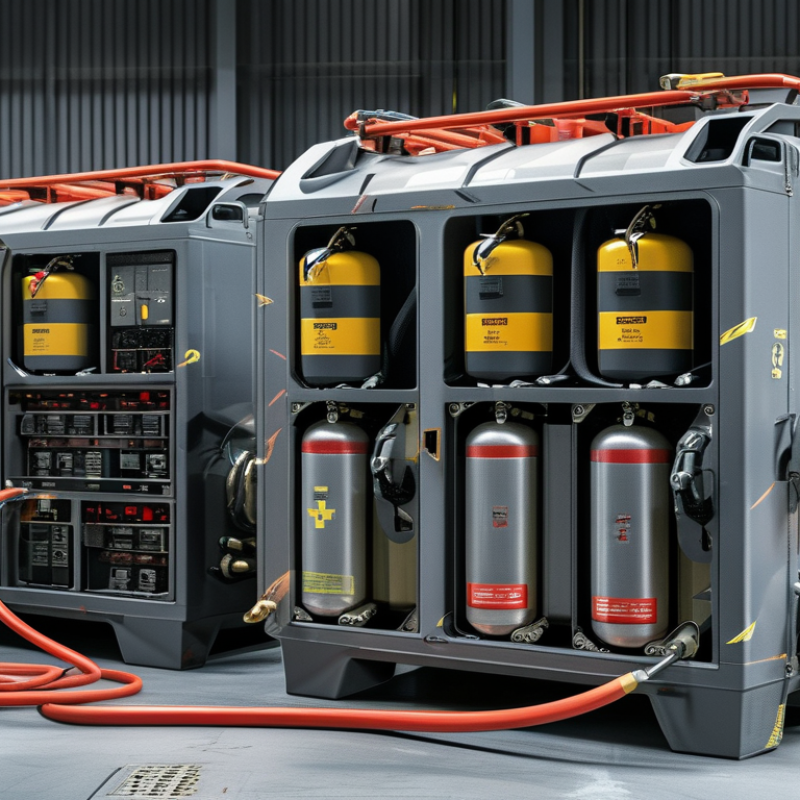
Top Fire Suppression Requirements for Energy Storage Containers?

Energy Storage Container Fire Hazards and Protection Objectives

Energy storage containers concentrate large amounts of electrical energy in a small, enclosed space. The main hazard is thermal runaway, where one damaged cell releases heat and ignites nearby cells. Off-gassing can create a flammable cloud before flames appear. Delayed reignition is also common after visible flames disappear. EPRI’s Battery Energy Storage System Failure Incident Database identifies recurring patterns involving thermal runaway, gas ignition, and incomplete cooling. These findings challenge a simple alarm-and-extinguisher approach.

Protection objectives should be measurable. Early detection must identify smoke, heat, and combustible gases at different stages. UL 9540A test reports measure propagation, heat release, gas composition, and fire behavior across cell, module, unit, and installation levels. Those results should guide spacing, ventilation, and suppression design.

NFPA 855 also addresses separation, emergency planning, explosion control, and firefighter access. A detector alone is not protection.

The container should limit cell-to-cell propagation and prevent pressure from becoming a structural failure. Cooling water may control temperature, but it cannot replace gas management or isolation. FM Global property-loss guidance emphasizes clear separation, drainage, and reliable emergency response arrangements. Field inspections should check blocked vents, damaged cables, sensor faults, and doors that cannot open freely. Small oversights matter. A safer design also assumes the first plan may fail, because real incidents rarely follow test conditions exactly.

Core Fire Suppression System Requirements for Energy Storage Containers

Energy storage containers need a fire suppression system designed for lithium-ion battery risks. The core requirement is early detection. Use smoke, heat, and off-gas sensors where practical. Battery temperatures can rise quickly. A reliable system should trigger alarms before visible flames appear.

The suppression method must match the battery chemistry, enclosure volume, and ventilation design. It should control flames, limit heat spread, and support safe emergency response. The system also needs automatic activation, manual release, local alarms, remote status signals, and backup power. Engineers should verify agent concentration, discharge time, nozzle coverage, and pressure limits. Enclosure integrity matters. Open doors, damaged seals, or poor cable entries can reduce performance. No design is perfect. Field conditions may expose gaps that drawings miss.

Tips: Keep detection devices away from exhaust paths and direct heat sources. Test sensors, alarms, release circuits, and backup batteries during commissioning. Inspect after every thermal event, even when no flames are visible. Train operators to isolate power and follow the approved emergency plan. Maintenance records should include test results, sensor condition, agent levels, and corrective actions. Consult qualified fire engineers and the local authority before installation. Testing is often rushed. That is a mistake.

Top Fire Suppression Requirements for Energy Storage Containers? - Core Fire Suppression System Requirements for Energy Storage Containers
Design Dimension Core Requirement Practical Application in an Energy Storage Container Common Reference or Verification Basis
Code and Risk Basis Use a documented hazard analysis and comply with the adopted local fire, building, and electrical codes. The design should consider battery chemistry, energy capacity, enclosure arrangement, occupancy, spacing, emergency access, and the possibility of thermal runaway propagation. The applicable edition is determined by the authority having jurisdiction. NFPA 855; International Fire Code; local regulations; authority having jurisdiction
System Listing and Testing Select equipment and the overall safety approach using recognized product listings and full-scale fire or propagation test evidence where required. Verify that battery modules, racks, cabinets, containers, detection devices, suppression equipment, and control interfaces are compatible with the intended installation. Test results should match the actual battery type, configuration, and operating conditions as closely as possible. UL 9540; UL 9540A; applicable product certification requirements
Early Detection Provide continuous detection for smoke, heat, and abnormal battery conditions. Use a coordinated combination of smoke detection, rate-of-rise or fixed-temperature heat detection, and battery management system alarms. Detection should identify an abnormal condition before visible flame develops whenever technically feasible. NFPA 72; NFPA 855; manufacturer data; approved fire alarm design
Off-Gas Detection Consider combustible or toxic gas detection when battery failure can release hazardous gases before ignition. Install gas sensors where justified by the battery chemistry and enclosure design. Alarm thresholds, sensor placement, calibration, and voting logic should be established through engineering analysis and validated testing. NFPA 855; UL 9540A test data; fire protection engineering analysis
Fire Alarm and Notification Provide a supervised alarm system with local and remote notification. The alarm system should transmit fire, smoke, heat, gas, suppression discharge, trouble, power-loss, and supervisory signals to a continuously monitored location when required. Audible and visual notification should be suitable for the site environment. NFPA 72; local fire code; emergency response plan
Suppression Selection Choose the suppression method according to the enclosure hazard, battery chemistry, credible fire scenario, and test evidence. Water-based systems may provide cooling and help limit fire spread. Clean-agent or inert-gas systems may control enclosed flaming fires but generally do not remove the heat stored in cells or guarantee prevention of thermal runaway. The selected system must be supported by engineering analysis and applicable testing. NFPA 13; NFPA 855; UL 9540A; manufacturer design data
Cooling and Re-Ignition Control Address residual heat, propagation, and re-ignition rather than relying only on flame extinguishment. The design should define how cooling is delivered, how long it remains available, how responders access the container, and how the system manages hidden or adjacent cells that may continue to heat after visible flames are controlled. UL 9540A results; fire department procedures; engineering calculations
Automatic System Activation Provide automatic activation logic with manual emergency controls where permitted by the approved design. A typical sequence may include alarm confirmation, equipment shutdown, isolation of affected sections, ventilation control, notification of responders, and suppression release. Manual release and abort functions should be protected against accidental operation and clearly labeled. NFPA 72; NFPA 2001 where applicable; approved sequence of operations
Battery Management Interface Integrate the fire protection system with the battery management system and power conversion equipment. Critical signals may include over-temperature, cell voltage abnormalities, insulation faults, smoke, gas, door opening, loss of cooling, and emergency shutdown. Communication failures should generate a supervised trouble signal rather than remain undetected. NFPA 855; electrical safety requirements; system control documentation
Ventilation and Deflagration Risk Evaluate gas accumulation, ventilation, pressure relief, and potential deflagration hazards. Ventilation should not unintentionally spread smoke or hazardous gases to occupied areas. Where combustible gas accumulation is credible, the design may require mechanical exhaust, gas detection, explosion control, classified equipment, or other engineered safeguards. NFPA 68; NFPA 69; NFPA 855; hazardous-area analysis
Water Supply and Drainage Confirm adequate water demand, duration, pressure, and drainage for water-based protection. The design should account for hydraulic demand, freeze protection, water storage or fire pump capacity, runoff containment, electrical isolation, and the possibility of contaminated fire water. Actual duration and density must follow the approved design standard and authority requirements. NFPA 13; NFPA 20; NFPA 22; environmental and local fire requirements
Electrical Isolation Provide safe emergency shutdown and isolation procedures without assuming that all electrical energy is immediately removed. Disconnects should be accessible, clearly identified, and coordinated with the battery management system, inverter, auxiliary power, and fire alarm controls. Responders must be informed that batteries can retain hazardous voltage after shutdown. NFPA 70; NFPA 855; electrical safe-work procedures
Container Layout Maintain required clearances, separation, access, and fire-service working space. Provide access for inspection and emergency response, protect equipment from vehicle impact, maintain required spacing between units, and keep exits and access paths unobstructed. Clearances should be based on the adopted code and validated test results. NFPA 855; International Fire Code; site-specific fire protection plan
Environmental Protection Ensure the system operates across the container’s temperature, humidity, corrosion, dust, and vibration ranges. Use appropriately rated detectors, piping, valves, enclosures, batteries, and control panels. Protect water-based components from freezing and verify that condensation or corrosive atmospheres will not impair detection or suppression performance. Equipment environmental ratings; NFPA installation standards; manufacturer specifications
Inspection and Maintenance Establish documented inspection, testing, servicing, and calibration procedures. Routine work should cover detectors, alarms, gas sensors, suppression cylinders or valves, pumps, piping, nozzles, pressure supervision, emergency power, communications, and battery management interfaces. Deficiencies should be tracked to closure. NFPA 25; NFPA 72; NFPA 2001 where applicable; equipment manuals
Emergency Response Provide responders with site-specific information and a written emergency response plan. The plan should identify battery chemistry, electrical isolation points, suppression type, gas hazards, re-ignition risks, water requirements, access routes, thermal imaging procedures, damaged-battery handling, and post-fire monitoring requirements. NFPA 855; local fire department requirements; emergency response plan
Documentation and Acceptance Complete commissioning, functional testing, records, and authority approval before placing the container into service. Maintain approved drawings, hydraulic or agent calculations, cause-and-effect matrices, test certificates, inspection records, software settings, operating procedures, and training records. Acceptance testing should verify every alarm, shutdown, supervisory, and suppression function. NFPA 72; NFPA 25; NFPA 855; authority having jurisdiction

Important: Fire suppression requirements vary by battery chemistry, system capacity, container configuration, jurisdiction, adopted code edition, and authority having jurisdiction. The final design should be prepared and approved by qualified fire protection and electrical professionals using project-specific test data.

Detection, Alarm, and Thermal Runaway Monitoring Measures

Top Fire Suppression Requirements for Energy Storage Containers

Detection, Alarm, and Thermal Runaway Monitoring Measures

Energy storage containers need layered detection, not one alarm device. Smoke sensors can identify early combustion products, while heat sensors confirm rising temperatures. Gas detection adds another warning signal. Some battery failures release flammable gases before visible smoke appears. This timing matters.

Thermal runaway monitoring should track cell, module, and container conditions. Temperature sensors need suitable spacing near likely hotspots and cooling boundaries. Voltage imbalance can also indicate internal faults. A battery management system should communicate abnormal trends to the fire alarm panel. The alarm should provide clear levels, such as warning, evacuation, and emergency shutdown. Keep records of every alert.

Audible and visual alarms must remain noticeable outside noisy equipment areas. Remote notifications can help operators respond when containers are unattended. Automatic suppression may limit fire spread, but it cannot replace early detection or emergency planning. Ventilation controls should coordinate with gas alarms and shutdown functions. Design decisions should follow applicable fire codes and validated thermal runaway test data, including full-scale testing where required.

No sensor is perfect. Dust, condensation, and damaged wiring can create false alarms or missed signals. Routine inspection should test sensors, communication paths, backup power, and alarm audibility. In practice, teams sometimes focus on suppression equipment and neglect alarm logic. That weakness deserves review.

A quiet container is not necessarily a safe container.

Suppression Agents, System Design, and Container Integration

Top Fire Suppression Requirements for Energy Storage Containers?

Suppression agents must match the failure mode, not merely the enclosure volume. Water-based systems can cool neighboring modules and slow thermal propagation. Clean agents may control flames, but they usually cannot remove cell-level heat. That distinction matters. The International Energy Agency’s 2024 Batteries and Secure Energy Transitions report notes that battery storage additions reached almost 42 GW in 2023. More containers mean more varied failure scenarios. UL 9540A test reports should guide agent selection, venting, detection, and separation distances.

System design needs layered protection. Install smoke, heat, and off-gas detection near likely release points. Connect alarms to ventilation, shutdown, and emergency notification logic. NFPA 855 emphasizes detection, spacing, fire protection, and emergency planning for energy storage installations. EPRI’s Battery Energy Storage System Failure Incident Database repeatedly highlights damaged cells, control faults, and installation conditions as contributing factors. A clean agent can look elegant. It may be the wrong answer.

Container integration is where many designs become fragile. Keep detectors clear of cable trays and airflow dead zones. Protect nozzles from impact during module replacement. Provide pressure relief without directing hot gases toward walkways or adjacent containers. Separate battery compartments from inverters when practical. Record sensor locations, agent quantities, test results, and maintenance access in the commissioning file. Water cooling remains effective, but drainage, electrical isolation, and contaminated runoff require careful planning. The design will never be perfect. It should remain inspectable, testable, and easy to challenge.

Top Fire Suppression Requirements for Energy Storage Containers

Suppression agents, system design, and container integration

How to read the chart: The index summarizes the engineering importance of each protection function on a 0–5 scale. It is a comparative design guide rather than a code-prescribed score.

Water-based systems provide the strongest heat-removal capability, which is critical for limiting propagation and cooling adjacent battery modules. Gaseous and aerosol agents can support early-stage flame suppression but generally require enclosure integrity, detection, ventilation control, and an assessment of re-ignition and thermal-runaway hazards.

Final system selection should be verified against the applicable edition of NFPA 855, the International Fire Code, NFPA 72, NFPA 2001 where applicable, local authority requirements, and battery-system fire-test results such as UL 9540A.

Inspection, Testing, Maintenance, and Regulatory Compliance

Top Fire Suppression Requirements for Energy Storage Containers?

Inspection, testing, and maintenance keep fire protection systems ready when batteries overheat. Qualified technicians should inspect containers at scheduled intervals and after any alarm event. They should check detectors, control panels, suppression piping, nozzles, power supplies, and emergency ventilation. Look for corrosion, blocked outlets, damaged wiring, and unusual heat near battery racks. Small details matter.

Testing should prove that each part works under realistic conditions. Technicians can verify alarm signals, detection zones, pressure readings, releasing circuits, and backup power. Test records should include dates, findings, corrective actions, and responsible personnel. A sensor that passes today may fail after dust, vibration, or software changes. No checklist is perfect.

Maintenance must follow the equipment design, site risk assessment, and applicable regulations. Requirements may involve local fire codes, electrical codes, permitting conditions, and authority having jurisdiction approval. Battery technology, container layout, and suppression media can change the required approach. Keep inspection reports, training records, incident logs, and updated drawings available for review. In practice, documentation is often the weakest control. A missing timestamp or unclear repair note can delay approval and hide recurring faults. Regular drills also help operators understand isolation procedures, alarm responses, and safe access limits. Personnel should never treat a quiet container as a safe container.

FAQS

: What is the main fire hazard inside an energy storage container?

: Thermal runaway is the main hazard. One damaged cell can heat nearby cells and start a chain reaction. Flammable gas may appear before flames or smoke.

Why is off-gas detection important?

Some battery failures release combustible gases before visible smoke appears. Gas detection can provide earlier warning. It should connect with ventilation, alarms, and emergency shutdown controls.

Is one smoke detector enough?

No. A layered system is safer. Use smoke, heat, gas, temperature, and electrical monitoring together. One sensor can fail.

What should thermal runaway monitoring track?

Monitor cell, module, and container temperatures. Voltage imbalance may reveal internal faults. The battery management system should send abnormal trends to the alarm panel.

What alarm levels should a container provide?

Use clear stages, such as warning, evacuation, and emergency shutdown. Audible and visual signals should remain noticeable outside noisy equipment areas. Remote alerts help when nobody is nearby.

Which suppression method is most suitable?

The agent should match the failure mode. Water-based cooling can slow heat transfer between modules. Flame-control agents may not remove heat inside damaged cells.

What container features help limit fire spread?

Provide pressure relief, clear separation, and controlled ventilation. Do not direct hot gases toward walkways or neighboring containers. Keep battery compartments separate from power-conversion equipment when practical.

What maintenance checks are easy to overlook?

Inspect blocked vents, damaged cables, faulty sensors, and restricted doors. Test communication paths, backup power, and alarm audibility. Small oversights matter.

Can suppression replace emergency planning?

No. Suppression cannot replace detection, isolation, cooling, or response planning. Visible flames may disappear while dangerous heat remains. Reignition is possible.

How should the design be reviewed?

Use validated test data for spacing, ventilation, agent selection, and propagation control. Inspect sensor locations and maintenance access. The first plan may fail. That possibility deserves attention.

Conclusion

Energy storage containers require a comprehensive fire suppression strategy that addresses electrical faults, overheating, combustible materials, and thermal runaway. The key question is: what are the fire suppression requirements for energy storage containers? A suitable system should provide early smoke, heat, gas, and flame detection; continuous battery temperature monitoring; rapid alarm transmission; and automatic control responses. Protection objectives include preventing fire spread, limiting thermal runaway propagation, protecting nearby equipment and personnel, and allowing safe emergency shutdown and evacuation.

The suppression design should match the battery chemistry, enclosure size, ventilation arrangement, and expected fire scenario. It should use an appropriate, electrically safe suppression agent, reliable discharge controls, pressure relief considerations, and well-integrated interfaces with battery management, HVAC, alarms, and emergency power systems. Regular inspection, functional testing, sensor calibration, and maintenance are essential. Documentation, trained operators, clear emergency procedures, and compliance with applicable fire, electrical, building, and environmental requirements should support the system throughout its service life.

Charlotte

Charlotte

Charlotte is a seasoned marketing professional with a deep understanding of the company's portfolio and a passion for elevating its presence in the market. With a keen eye for detail and a commitment to excellence, she ensures that our professional blog is regularly updated with insightful articles......