7 Tips to Choose the Right IP Rating for Outdoor Substations

Time:2026-10-12 Author:Charlotte
0%

Choosing the correct enclosure rating is a practical engineering decision, not a label-selection exercise. Outdoor substations face rain, dust, insects, condensation, wind-driven debris, and occasional cleaning water. A poorly matched enclosure can allow moisture around cable glands, corrosion near hinges, or dust across energized components. These details often decide whether equipment remains reliable.

Electrical enclosure specialist John E. Traister once noted, “The enclosure is the first line of defense against the environment.” His observation remains useful when considering how to choose the right enclosure IP rating for outdoor substations. The IP code describes protection against solid particles and water, but it does not solve every environmental problem. It does not automatically address ultraviolet exposure, salt mist, chemical vapors, impact, or internal condensation.

The right decision begins with the site itself. Is the substation beside a coast, a dusty road, or a chemical facility? Will technicians wash the enclosure with a hose? Can afternoon temperature changes create moisture inside? An IP54 enclosure may suit a sheltered location, while IP65 or IP66 may be more appropriate for exposed equipment. Yet higher is not always better. Excessive sealing can trap heat and complicate pressure equalization.

Small mistakes matter. A strong enclosure can still fail when glands, doors, or roof joints are poorly installed. This guide examines seven practical tips, including climate exposure, water pressure, ventilation, materials, maintenance, and installation quality. It also questions a common assumption: the highest IP number is not automatically the safest choice.
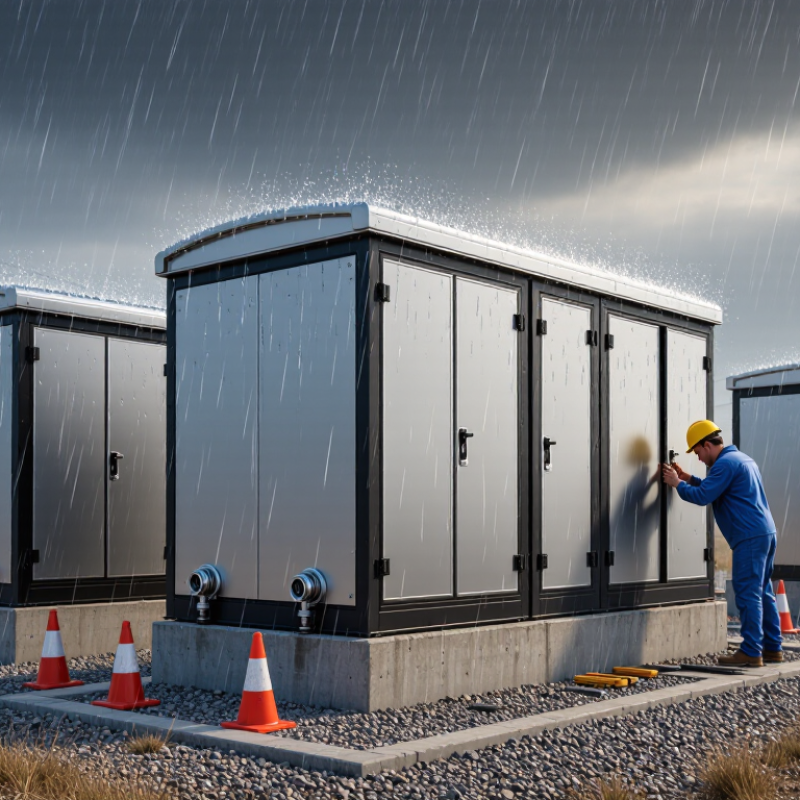
7 Tips to Choose the Right IP Rating for Outdoor Substations

Understanding IP Ratings for Outdoor Substation Equipment

Outdoor substation equipment faces rain, dust, ice, insects, and sudden temperature changes. The IP rating explains protection against solids and water. The first digit covers solids, from 0 to 6. The second covers moisture, from 0 to 9K in some standards. Higher numbers are not automatically better. They must match the enclosure’s real exposure. Tip 1: Inspect the site for grit, standing water, coastal salt, and washing activities. Tip 2: Separate sheltered cabinets from fully exposed terminal boxes. Tip 3: Check the exact standard and test conditions. An IP rating does not guarantee corrosion resistance or flood protection.

Tip 4: Choose the water rating from actual spray direction. IP54 may suit limited splash exposure, while IP66 handles powerful water jets. Do not treat IP66 as permanent submersion protection. Tip 5: Check cable glands, doors, hinges, and drain plugs. One poorly sealed entry can weaken the whole enclosure. Small details matter.

Tip 6: Verify temperature and pressure effects. Seals can harden, and condensation may form after a cold night. A breather drain can help, but installation must be correct. Tip 7: Review maintenance access before approval. A sealed box that cannot open safely creates practical risk. Ask a qualified engineer to confirm the rating for the complete assembly, not only its empty enclosure. I have seen specifications look excellent on paper, yet fail at the weakest fitted component. That is an uncomfortable lesson.

Assessing Weather, Dust, Water, and Corrosion Exposure

7 Tips to Choose the Right IP Rating for Outdoor Substations

Outdoor substations face more than rain. Dust, driving spray, condensation, salt, and industrial pollutants can enter through small openings. Tip 1: Identify the real exposure at the installation site. A dry inland yard needs less protection than a coastal site with wind-blown salt. Tip 2: Check the first IP digit for solids. IP6X means the enclosure is dust-tight, which helps protect relays, terminals, and busbar connections.

Tip 3: Match the second digit to water conditions. IPX4 handles splashing water, while IPX6 withstands powerful water jets. IPX7 covers temporary immersion, but IP66 does not automatically mean IP67. This detail is often misunderstood. Tip 4: Study drainage and condensation risks. A sealed cabinet can still collect moisture after a cold night. Tip 5: Consider cleaning practices, including pressure washing near doors, cable glands, and ventilation paths.

IP ratings do not measure corrosion resistance. Tip 6: For coastal or chemical environments, specify suitable enclosure materials, coatings, fasteners, and cable glands. Salt deposits may damage hardware long before water reaches the equipment. Tip 7: Inspect seals during commissioning and maintenance. Look for flattened gaskets, cracked gland seals, blocked drains, and loose door latches. Small defects matter. Field conditions rarely match laboratory assumptions, and selecting the highest IP rating alone may create heat, access, or maintenance problems. A practical assessment should balance weather, dust, water, corrosion, ventilation, and service access.

7 Tips to Choose the Right IP Rating for Outdoor Substations

Compare common IP ratings by their IEC 60529 protection levels against solid particles and water exposure. Higher values indicate greater protection, but the final selection should also consider dust, rain, condensation, washing, flooding, and corrosion risks.

How to read the chart: The first digit rates protection against solid objects and dust on a 0–6 scale. The second digit rates protection against water on a 0–9 scale. For many outdoor substations, IP54, IP55, IP65, or IP66 may be considered depending on the installation environment and enclosure design.

Matching IP Protection Levels to Substation Components

7 Tips to Choose the Right IP Rating for Outdoor Substations

Matching IP protection to each substation component prevents overdesign and hidden failure points. IEC 60529 defines IP6X as dust-tight and IPX6 as protection against powerful water jets. That does not make IP66 suitable everywhere. A control cabinet may need IP55 in a sheltered yard, while a cable termination box may require IP65 or IP66. Check rain direction, washdown practices, drainage, and maintenance access.

Use seven practical checks. Match the first digit to dust exposure. Match the second digit to water intensity.

Review door seals, cable glands, hinges, and viewing windows as one system. Protect ventilation openings with tested filters, not improvised mesh.

Add drains where condensation can collect. Select corrosion-resistant materials near coastal or industrial sites. Verify ratings after field modifications. Small details matter. They often fail first.

IEC 62271-1 identifies outdoor service conditions, including ambient temperatures from -25°C to +40°C under normal conditions. Temperature cycling can stiffen gaskets and create internal condensation. An IP66 enclosure may still trap moisture if pressure equalization is ignored.

Field inspections frequently find loose glands and damaged seals, even on newly installed equipment. That is an uncomfortable reminder: the label is not the whole design.

Recheck the rating after every cable replacement, repainting cycle, and enclosure repair. Industry standards guide selection, but site evidence should challenge assumptions.

Applying Seven Practical Criteria to Select the Right Rating

7 Tips to Choose the Right IP Rating for Outdoor Substations

Applying Seven Practical Criteria to Select the Right Rating

An IP rating should match the site, not a catalog habit. IEC 60529:2013 defines IP6X as dust-tight and IPX6 as protection against powerful water jets. These ratings describe enclosure testing, not complete outdoor durability. Field engineers should record dust type, rainfall direction, and cleaning methods before selecting protection.

Seven practical criteria make the decision stronger. Check airborne dust, driven rain, water jets, condensation, temperature swings, salt exposure, and maintenance access. Coastal substations may need corrosion-resistant materials beyond the IP code. IEC 62271-1:2017 also requires equipment assessment under defined environmental service conditions. A sealed enclosure can still trap moisture after a cold night. Small detail. Often missed.

Review flood risk and drainage around cable entries. Verify gasket aging, door compression, ventilation, and pressure equalization. Then compare IP54, IP55, IP65, and IP66 against the actual threat. The International Energy Agency reports that electricity grids face increasing weather-related disruption, while the World Meteorological Organization documents rising heavy-precipitation risks in many regions. That evidence supports conservative site assessments, but it does not justify choosing the highest rating automatically. Higher sealing can increase heat buildup and complicate inspection. Engineers should test the final enclosure with representative dust and water exposure. An IP66 decision may still be wrong. Recheck it after one seasonal operating cycle.

7 Tips to Choose the Right IP Rating for Outdoor Substations - Applying Seven Practical Criteria to Select the Right Rating

No. Selection Criterion Typical Outdoor Substation Condition Suggested Minimum IP Rating Why It Matters Practical Selection Check
1 Dust and solid-particle exposure Dry soil, airborne dust, sand, and particles from nearby construction or unpaved areas. IP5X
or higher
The first IP digit describes protection against solid objects. IP5X limits harmful dust ingress, while IP6X is dust-tight. Choose IP6X for dusty locations, sensitive control electronics, or equipment requiring a dust-tight enclosure.
2 Rain and wind-driven water Normal rainfall, crosswinds, and water entering from different directions around outdoor cabinets. IP55 The second IP digit indicates water protection. IPX5 protects against water jets from any direction. Use IP55 or IP65 when rain can reach doors, cable glands, ventilation openings, or enclosure joints.
3 Hose-directed water and cleaning Routine cleaning, maintenance washdown, or accidental exposure to stronger water jets. IP65
or IP66 for stronger jets
IPX5 covers water jets; IPX6 covers powerful water jets. Neither rating automatically covers immersion. Select IP66 where cleaning equipment or high-pressure water may be directed at the enclosure.
4 Flooding and temporary immersion Low-lying sites, intense storms, blocked drainage, or temporary water accumulation around cabinets. IP67
or IP66/IP67
IPX7 addresses temporary immersion in water up to 1 metre under the applicable test conditions. IPX7 alone does not guarantee protection against water jets. Use a dual rating such as IP66/IP67 when both powerful water jets and temporary immersion are credible risks.
5 Condensation and internal moisture Large day-to-night temperature changes, humid climates, or repeated enclosure heating and cooling cycles. IP54
or higher
IP ratings limit external ingress but do not by themselves prevent condensation inside an enclosure. Combine the selected IP rating with drain provisions, breather systems, anti-condensation heaters, or humidity control where necessary.
6 Cable entries, doors, and maintenance access Multiple cable glands, removable panels, frequently opened doors, and field-installed accessories. IP55
after installation
The complete installed assembly must maintain its intended protection; enclosure certification alone is not sufficient. Verify door seals, gland selection, unused-entry plugs, fasteners, hinges, and reassembly procedures before commissioning.
7 Corrosive atmosphere and long-term outdoor exposure Coastal salt spray, industrial pollutants, high humidity, ultraviolet radiation, and prolonged sunlight. IP65
plus suitable materials
IP ratings address ingress protection, not corrosion resistance, UV stability, coating durability, or material compatibility. Specify corrosion-resistant materials, protective coatings, UV-resistant seals, and a suitable environmental classification in addition to IP65.
Reference note: IP codes are defined by IEC 60529. The final rating should be selected from the site risk assessment and verified for the complete installed enclosure, including doors, cable entries, ventilation components, and accessories. Higher IP protection does not automatically provide better heat dissipation or corrosion resistance.

Verifying Standards, Installation Quality, and Maintenance Needs

Selecting an IP rating for an outdoor substation starts with the real environment. Check dust, rain, wind-driven water, salt, and temperature changes. Verify the rating against IEC 60529 and applicable local electrical codes. Project specifications may demand more than the minimum legal requirement. An IP6X rating controls dust ingress, while an IPX6 rating addresses powerful water jets. These ratings do not confirm resistance to corrosion, sunlight, impact, or condensation. That distinction is often missed.

Installation quality can defeat a suitable enclosure. Inspect cable glands, door seals, hinges, drainage paths, and unused openings. Confirm that installers tightened fittings correctly and avoided sharp cable bends. A small gap near a gland may admit moisture during a storm. Field inspections should include photographs, torque records, and water-ingress checks. Paper compliance is not enough. In practice, the weakest entry point often controls the whole enclosure’s performance.

Maintenance needs should influence the choice before equipment arrives. Dusty or coastal sites require more frequent seal inspections and careful cleaning. Check for cracked gaskets, blocked drains, corrosion marks, and loose hardware. Re-test protection after cable changes or door repairs. Keep dated records. They reveal patterns that memory misses. A higher IP rating may reduce risk, but it can also complicate heat release and servicing. That trade-off deserves review. I would not treat any rating as permanent; installation conditions change, sometimes quietly.

FAQS

What does an IP rating measure?

The first digit measures protection from solid particles. The second digit measures protection from water. Higher numbers are not automatically better.

Which IP rating protects against dust?

IP6X indicates a dust-tight enclosure. This helps protect relays, terminals, and busbar connections from fine particles.

Does IP66 protect equipment from flooding?

No. IP66 protects against powerful water jets. It does not automatically provide permanent submersion protection. Not always.

Is IP54 suitable for every outdoor substation?

IP54 may suit limited splash exposure. A coastal site or pressure-washing area may require stronger water protection and corrosion controls.

Why should the installation site be inspected before choosing an IP rating?

Record dust, driven rain, standing water, salt, condensation, and cleaning methods. A dry inland yard differs greatly from a windy coastal site.

Can a high IP rating prevent corrosion?

No. IP ratings do not measure corrosion resistance. Salt deposits can damage fasteners before water enters the enclosure.

Which enclosure details commonly weaken protection?

Check cable glands, doors, hinges, gaskets, latches, and drain plugs. One poorly sealed cable entry can weaken the entire enclosure.

Can a sealed enclosure still collect moisture?

Yes. Temperature changes may cause condensation after a cold night. Correct drainage and pressure equalization can help, but installation matters.

Should engineers always select the highest available IP rating?

No. Excessive sealing can increase heat buildup and complicate maintenance access. Match protection with actual exposure, ventilation, and servicing needs.

Should the complete assembly be tested?

Yes. Review fitted components, seals, cable entries, and doors, not only the empty enclosure. A specification can look excellent and still fail.

Conclusion

Choosing the correct IP rating is essential for protecting outdoor substation equipment from dust, rain, humidity, water jets, and other environmental hazards. An IP code indicates the enclosure’s resistance to solid particles and moisture, but the ideal level depends on the installation site. To determine how to choose the right enclosure IP rating for outdoor substations, assess local weather conditions, dust concentration, flooding or washdown risks, salt exposure, temperature changes, and the likelihood of corrosion.

The selection should also reflect the needs of each component, including control cabinets, junction boxes, monitoring devices, and power equipment. Seven practical criteria can guide the decision: environmental exposure, equipment sensitivity, water-contact risk, corrosion potential, ventilation requirements, installation position, and future maintenance access. A suitable rating should be verified against applicable standards and confirmed through careful installation, including sealed cable entries, correctly fitted gaskets, and secure doors. Regular inspection and maintenance are equally important, because damaged seals, blocked drainage, or poor modifications can reduce protection over time.

Charlotte

Charlotte

Charlotte is a seasoned marketing professional with a deep understanding of the company's portfolio and a passion for elevating its presence in the market. With a keen eye for detail and a commitment to excellence, she ensures that our professional blog is regularly updated with insightful articles......