Choosing between pad-mounted and prefabricated substations is not just a matter of comparing footprints. The right option depends on load requirements, site conditions, access for maintenance, and the level of equipment integration needed. In China, suppliers may use these terms differently, so buyers should examine actual designs rather than rely on product labels.
A pad-mounted substation typically places a distribution transformer and associated equipment in a secure, ground-level enclosure. It can suit compact outdoor installations, such as commercial sites or residential developments. A prefabricated substation is generally a factory-assembled unit that may combine transformers, switchgear, protection, and control equipment inside a modular enclosure. Configurations vary. Some overlap is possible.
So, what is the difference between pad-mounted and prefabricated substations? This guide compares their structures, applications, installation needs, and maintenance considerations, while explaining where the categories may blur. For a “China Top 10” supplier shortlist, rankings alone are not enough. Check technical datasheets, rated voltage and capacity, environmental protection, test documentation, customization options, and after-sales support. Ask how the unit will be transported and positioned; a narrow access road can change a project plan quickly.
Details matter. A drawing may look convincing, yet leave ventilation or cable access unclear. Buyers should verify requirements with qualified electrical professionals and request project-specific specifications. This comparison offers a practical starting point, not a substitute for engineering review. The terminology is imperfect, and that is worth remembering.
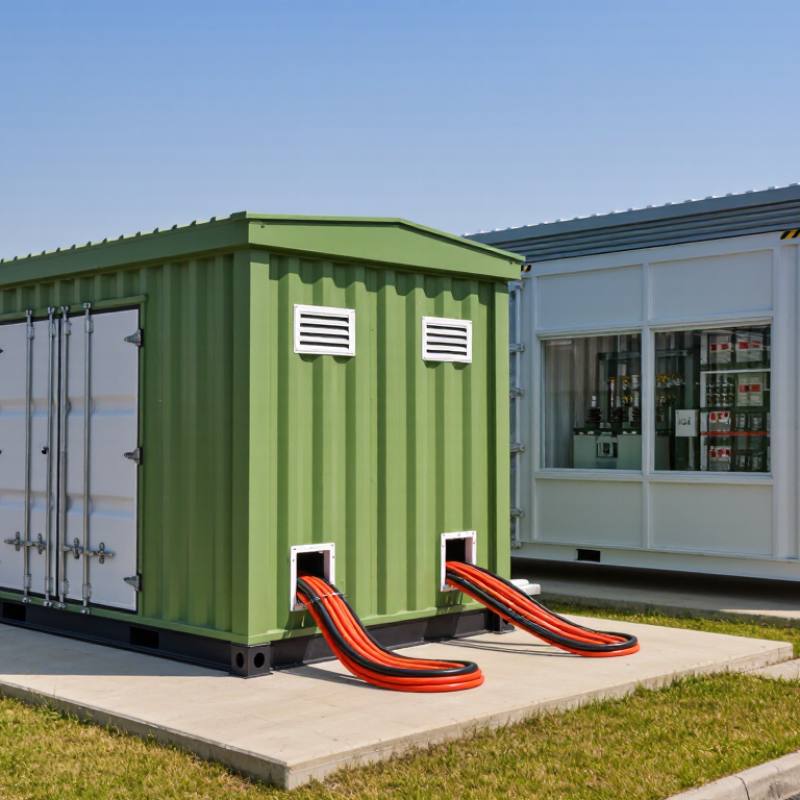
For China’s 10 kV/0.4 kV, 50 Hz distribution baseline, the key question is how the equipment fits the site and operating plan. A pad-mounted unit typically places the transformer and switching components in a compact, ground-level enclosure. A prefabricated substation is a broader packaged assembly, often combining high-voltage, transformer, and low-voltage sections.
At a roadside site, a compact enclosure may simplify placement, but vehicle access, ventilation, drainage, and maintenance clearance still matter. In a residential or industrial project, a prefabricated arrangement can help organize separate compartments and cable routes.
That matters. Both options must suit the expected load, fault level, protection scheme, ambient conditions, and local utility requirements.
Confirm the 10 kV incoming arrangement and 0.4 kV outgoing distribution before comparing footprints or prices. A drawing can look neat while leaving awkward cable bends or little room for safe servicing.
I would not choose by enclosure type alone; site measurements and future load growth deserve equal attention.
China’s distribution projects often compare pad-mounted units with walk-in prefabricated substations. The distinction is practical: pad-mounted designs keep equipment in a compact, ground-level enclosure, while prefabricated designs can provide separate service areas for switchgear, transformers, and low-voltage panels. Either arrangement must be assessed as a complete substation, not by enclosure size alone.
IEC 62271-202:2022 covers AC prefabricated substations above 1 kV and up to 52 kV. It provides the relevant framework for checking rated voltage, temperature rise, enclosure protection, and internal-arc classification.
A compact cabinet may suit a constrained site, but maintenance access and heat dissipation still need careful review.
That detail is easy to miss.
The International Energy Agency’s 2023 grid report says annual grid investment needs to rise from about USD 300 billion to over USD 600 billion by 2030. This points to growing pressure for repeatable, quickly deployable equipment, but not one universal design.
In China, soil conditions, flood exposure, cable entry, and utility access can change the choice. A prefabricated unit may offer easier inspection; a pad-mounted design may reduce its footprint. Neither is automatically safer or cheaper.
Check the project’s IEC test evidence and site conditions. I would not choose from a brochure drawing alone.
China’s pad-mounted units and prefabricated substations serve different site needs. A pad-mounted transformer is often a compact, ground-level package for local distribution. Prefabricated substations combine equipment in an enclosure and may support broader switching or control functions. Neither format guarantees a higher transformer rating. Check voltage, capacity, fault duty, cooling, and future load; project design matters more than the enclosure name.
Footprint is not just the cabinet outline. Allow room for cable bends, doors, ventilation, maintenance access, and safe working clearances. Pad-mounted equipment can fit neatly beside a building or road, but access may be awkward in a crowded plot. Prefabricated units may need a larger prepared base, yet consolidate switchgear and protection equipment. Switching arrangements vary: some installations offer limited local isolation, while others include more extensive medium-voltage switching. Confirm the single-line diagram and operating sequence. Safety depends on interlocks, earthing, barriers, arc-fault considerations, and clear labeling, not appearance alone. The comparison is not perfectly clean; configurations differ.
Tips: Compare nameplate data and layout drawings, then mark service clearances on the actual site plan. A neat drawing can still miss a cable trench.
When comparing China’s ten leading suppliers, assess documented performance, not catalogue claims. GB/T 17467-2020 covers high-voltage/low-voltage prefabricated substations, giving buyers a shared basis for reviewing design and tests. Ask each supplier for test reports tied to the exact model and configuration. Check rated voltage, temperature rise, dielectric performance, short-circuit withstand, enclosure protection, and switchgear-transformer coordination. Evidence matters. A report for a similar unit may not verify the one being offered.
The National Energy Administration reported that China’s grid investment reached about RMB 608.3 billion in 2024, up 15.3% year on year. That expansion makes delivery capacity worth checking, but it does not prove product quality. Compare factory inspection records, component traceability, routine-test procedures, and the supplier’s ability to provide service near the installation site.
For pad-mounted designs, inspect access, ventilation, cable compartments, and safe maintenance clearances.
For other prefabricated layouts, review transport dimensions, assembly interfaces, and site commissioning requirements.
Request drawings and test evidence before scoring. A tidy datasheet can still hide gaps; I would treat missing configuration-specific records as an unresolved risk, not an automatic failure.
Choosing between a pad-mounted transformer and a prefabricated substation starts with the load, not appearance. A pad-mounted unit often suits a compact site, underground feeds, and a defined building load. It can sit beside a service road or landscaped boundary. A prefabricated substation may fit larger demand, multiple feeders, or expansion plans, but needs space for transport, lifting, access, and safe maintenance. Measure the actual route in: a tight gate can turn a neat equipment layout into a costly installation problem.
Site conditions matter. Check flood exposure, ventilation, cable entry points, noise limits, and room for future replacement. Then compare installed cost, outage risk, maintenance access, and transformer losses across the expected service life. The IEA’s 2023 report, Electricity Grids and Secure Energy Transitions, says annual grid investment needs to rise to more than $600 billion by 2030. That is a system-wide estimate, not a direct cost comparison between these substation types. DOE’s 2024 distribution-transformer efficiency rule projects 3.6 quadrillion Btu in energy savings over 30 years. Efficiency deserves attention, but the rule does not favor one enclosure format. A lifecycle estimate should use the project’s load curve and local energy prices. Those assumptions can be messy. Recheck them before choosing.
A practical comparison for typical 10 kV / 0.4 kV distribution projects. Final selection depends on the utility’s requirements, project design, local codes, and site conditions.
| Application | Indicative Peak Demand | Pad-Mounted Option | Prefabricated Substation Option | Site and Installation Factors | Lifecycle Cost Considerations | Typical Direction |
|---|---|---|---|---|---|---|
| 1. Small retail or commercial building | About 100–400 kW | Often suitable for a simple outdoor transformer installation with limited equipment integration. | Useful when the project needs coordinated high-voltage switching, metering, protection, and low-voltage distribution in one package. | Check outdoor access, working clearances, ventilation, noise limits, and separation from public areas. | Compare enclosure and civil-work costs against the cost of separately installed switchgear and protection. | Pad-mounted for a simple layout; prefabricated for integrated equipment. |
| 2. Residential development | About 300–1,200 kW per supply section | Can suit distributed transformer locations where low-profile equipment and separate feeder arrangements are acceptable. | Can simplify coordination of transformer, switching, and multiple low-voltage outgoing circuits. | Plan for resident access, fire separation, noise, maintenance access, and more than one supply point where required. | Compare the number of units, feeder lengths, maintenance access, and replacement needs over the service life. | Either; choose by feeder layout and required integration. |
| 3. General industrial plant | About 500–2,500 kW per transformer group | Can work well for a straightforward outdoor transformer serving a nearby main low-voltage board. | Often preferred when the design needs coordinated switchgear, protection, metering, and several outgoing feeders. | Allow for future load growth, equipment transport, maintenance clearances, and plant-specific environmental conditions. | Include downtime risk, spare-part strategy, access for maintenance, and the cost of future capacity expansion. | Prefabricated for a more integrated plant supply; pad-mounted for simpler arrangements. |
| 4. Electric-vehicle charging hub | About 200–1,500 kW, depending on charger count and operating profile | Suitable where a transformer-only or simple packaged arrangement can serve the charging distribution system. | Can accommodate coordinated switching, protection, metering, and multiple feeder circuits in a compact assembly. | Consider staged expansion, cable routing, charger spacing, public access, and ventilation requirements. | Assess the cost of adding capacity later, feeder losses, maintenance access, and potential service interruptions. | Prefabricated when multiple feeders or staged expansion are important. |
| 5. Data center or other high-availability facility | Typically 1–5 MW or more across multiple units | May be used as part of a distributed design, but redundancy and protection arrangements need project-specific engineering. | Can provide an integrated distribution block; critical facilities generally require multiple units and a separately designed redundancy scheme. | Plan for redundancy, maintenance without shutdown, fire protection, cooling, secure access, and equipment replacement routes. | Reliability, redundancy, and outage consequences may outweigh initial equipment-cost differences. | Prefabricated modules are often practical; engineer the full redundancy architecture. |
| 6. Rural, agricultural, or remote load | About 50–500 kW | Can be a practical choice for a simple outdoor installation with limited auxiliary equipment. | Useful when the site needs integrated protection or a more enclosed arrangement for local environmental conditions. | Check road access for delivery, flood exposure, dust, temperature range, and local maintenance capability. | Transport, site preparation, corrosion protection, and ease of servicing can matter more than enclosure price alone. | Pad-mounted for simple loads; prefabricated where integration or protection needs justify it. |
| 7. Water, wastewater, or public infrastructure | About 200–1,500 kW | Can serve a simple transformer duty when control and outgoing distribution equipment are located elsewhere. | Often helpful when several feeders, protection functions, or auxiliary services must be coordinated at the site. | Account for moisture, corrosive atmospheres, flooding, remote monitoring, and safe maintenance access. | Compare enclosure durability, inspection needs, corrosion control, and the cost of maintaining remote equipment. | Prefabricated where integrated switching and environmental protection are priorities. |
| 8. Space-constrained urban site | About 100–800 kW | A low-profile, non-walk-in configuration may fit well if required electrical clearances and access can be maintained. | A compact non-walk-in unit may also fit; larger walk-in arrangements may require more space. | Verify utility access, ventilation, fire separation, noise limits, cable entry, and permissions for the proposed location. | Include site preparation, acoustic measures, access arrangements, and any costs for underground cable work. | Select by verified footprint and clearances, not by equipment label alone. |
| 9. Coastal or polluted environment | About 200–1,250 kW | Can be specified for the environment, but enclosure materials, seals, and corrosion protection need careful selection. | Can offer a more enclosed equipment arrangement; environmental rating and materials still need to match the site. | Assess salt, humidity, wind-driven rain, dust, condensation, and the required enclosure protection level. | Compare initial protective treatments with inspection, cleaning, repainting, and component-replacement needs. | Either can work when correctly specified for the exposure conditions. |
| 10. Fast-track or temporary project | About 200–1,250 kW | May be quick to deploy when a suitable standardized configuration and prepared site are available. | Factory integration can reduce some on-site assembly and coordination, subject to design approval and delivery lead time. | Confirm transport dimensions, foundation readiness, approvals, cable connections, and commissioning requirements early. | Compare total installed cost and schedule risk; neither format is automatically faster in every project. | Prefabricated for coordinated packages; pad-mounted for standardized simple installations. |
Notes: Demand figures are indicative project-planning ranges, not equipment nameplate ratings. Required transformer capacity must be calculated from the load profile, power factor, diversity, starting currents, harmonics, ambient conditions, and applicable utility requirements. “Pad-mounted” describes a ground-level enclosed transformer arrangement; the scope of included switching and distribution equipment varies by design. Prefabricated substations commonly integrate high-voltage switchgear, a transformer, and low-voltage switchgear in a factory-assembled enclosure. Lifecycle cost depends on the complete installed system, including civil works, cabling, protection, energy losses, maintenance, and replacement.
A pad-mounted unit usually combines a transformer and switching parts in a compact, ground-level enclosure. A prefabricated substation may include high-voltage, transformer, and low-voltage sections. The terms can overlap, so check the layout.
A compact enclosure may fit beside a road, but check vehicle access, drainage, ventilation, and maintenance space. A small footprint can still create awkward access.
No. Compare voltage, capacity, cooling, fault duty, and expected future load. The enclosure name alone tells you little.
Measure the full service area, not just the cabinet outline. Include door swing, cable bends, ventilation, cable trenches, and working clearance. Drawings can miss details.
Review the single-line diagram and operating sequence. Check isolation, interlocks, earthing, barriers, labels, and arc-fault considerations. Appearance is not enough.
Request test reports for the exact model and configuration. Review temperature rise, dielectric performance, short-circuit withstand, enclosure protection, and equipment coordination. Similar reports may leave gaps.
No. Investment figures show market activity, not product quality. Check factory records, component traceability, routine tests, delivery ability, and nearby service support.
Review transport dimensions, assembly interfaces, cable routes, and commissioning needs. Also confirm site clearances and future load plans. I may be overthinking this, but a neat drawing can still hide a service problem.
This article examines the typical 10 kV/0.4 kV, 50 Hz distribution-substation baseline used in China and explains what is the difference between pad-mounted and prefabricated substations. Both designs integrate key distribution equipment, but they can differ in enclosure layout, installation method, footprint, access, and suitability for particular sites. The comparison considers transformer ratings, switching arrangements, safety features, and the relevance of IEC 62271-202 for prefabricated high-voltage/low-voltage substations rated up to 52 kV.
Rather than relying on supplier names alone, the article outlines how to assess China’s leading suppliers against GB/T 17467 and project requirements. Buyers can weigh load demand, available space, installation conditions, operating access, protection needs, and expected lifecycle costs. Matching these factors to the project helps determine whether a compact pad-mounted solution or a prefabricated substation offers the more practical balance of safety, performance, and long-term value.

Zeno Electric